My balcony plants used to die of thirst in summer while rain poured past them, and the absurdity of that finally got to me one July afternoon. I was standing inside with a watering can, filling it from the tap for the third time that week, watching rain hammer the balcony railing outside. The plants were two feet from a free water supply and I was paying for every drop they drank. That evening I put a bucket out on the balcony, mostly as a joke, and by morning it was half full. The joke turned into a system that has watered my plants ever since.
I am not talking about a complicated setup. No tanks, no pumps, no plumbing. Just buckets, a watering can, and a bit of attention to timing. My balcony is small, about two metres by one, with a railing and a slight slope toward the drain. I grow tomatoes in pots, herbs in a trough, a lemon tree in a big tub, and whatever else survives my enthusiasm. All of them now drink rainwater for most of the year, and they have never looked better.
The reason is simple, and a gardener friend explained it to me years before I acted on it. Tap water in many areas is hard, full of minerals that build up in pots over time, and it often contains chlorine that soil microbes do not love. Rainwater is soft and slightly acidic, which most container plants prefer. I did not test this scientifically. I just noticed that after a month of rainwater, my basil perked up, the white crust on the soil surface faded, and the tomato leaves stopped yellowing at the edges. Good enough for me.
The bucket that started everything
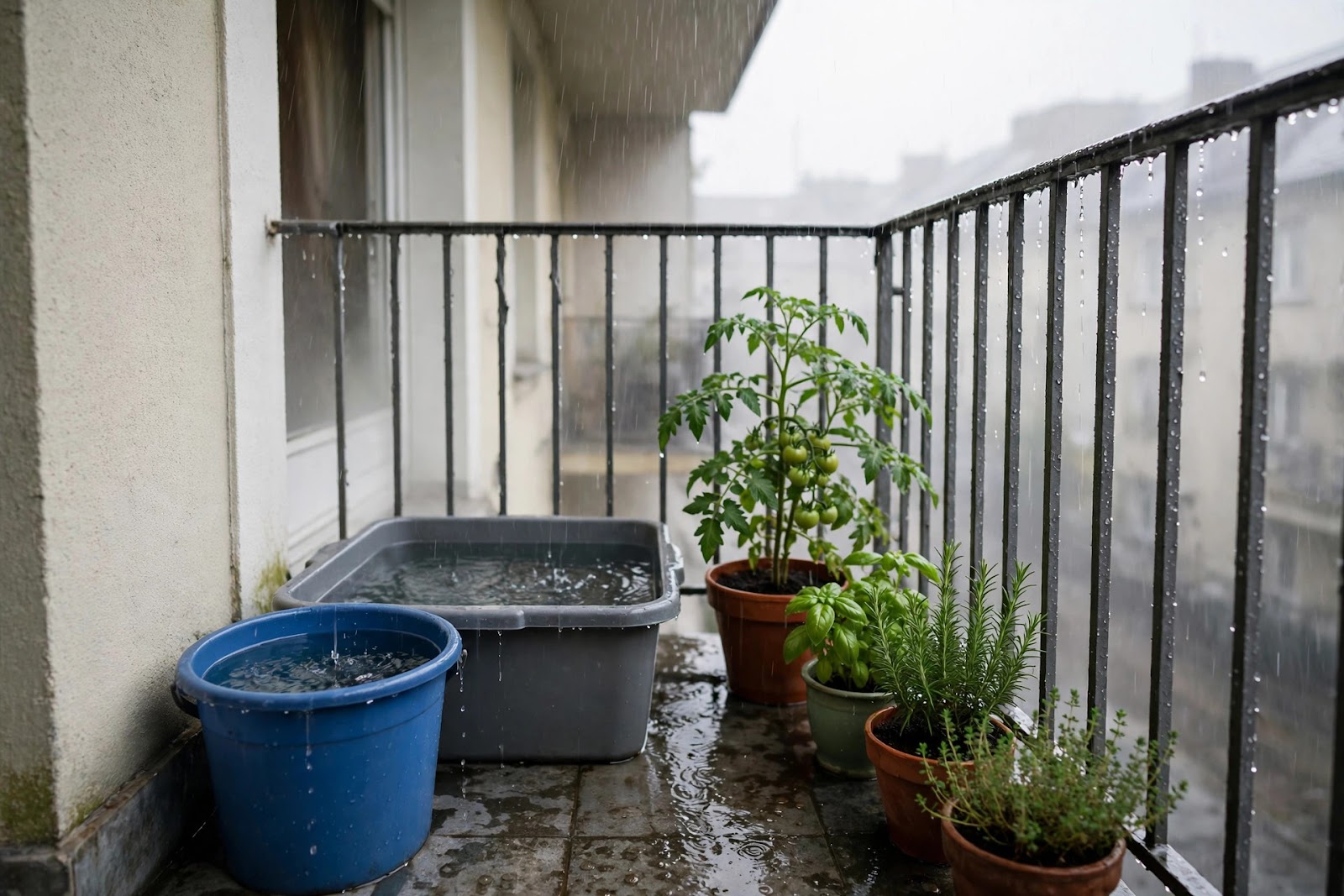
The first bucket was an old mop bucket, nothing fancy. I set it on the balcony floor near the railing, where rain drips off the edge above. After one decent shower it held about eight litres, which watered everything I owned for two days. That was the moment the system clicked. I was not trying to store a month of water. I just needed to catch what fell and use it before the next dry spell.
I added a second bucket a week later, a tall kitchen bin I no longer used, and then a third, a large plastic tub that once held bird seed. Three containers now sit along the balcony wall, and together they hold roughly thirty litres after a good rain. That covers my plants for about a week in summer and two weeks in cooler weather. When the forecast promises rain, I empty the watering can into the plants first, so the buckets have room to fill. It is a small rhythm, and it works.
One mistake I made early on was leaving the buckets uncovered. Within a week, leaves and dust had settled in, and a few mosquitoes found the still water. I fixed it with a piece of old mesh curtain draped over each bucket, held down with a rubber band. The mesh keeps leaves and insects out but lets rain straight through. It costs nothing, because I already had the curtain, and it solved the only real problem the system ever gave me.
How I collect without a roof to myself
People always ask how this works when I do not own the roof. The honest answer is that a balcony catches more water than you think, even without gutters. Rain does not fall straight down in a neat column. It blows sideways, drips off the balcony above, and runs along the railing. My buckets sit where the drip line falls, right at the edge of the balcony above mine. On a windy rainy day, they fill faster than on a calm one, because the wind drives the rain in.
I also use a trick I learned from a neighbour: a folded plastic sheet, propped at an angle, that funnels extra rain into the biggest tub. It is just a piece of old shower curtain, clipped to the railing with clothes pegs, sloping gently toward the tub. When rain starts, I peg it up. When the rain stops, I take it down and fold it away, because my building has rules about things hanging off balconies. The sheet roughly doubles what I collect in a light shower, and it takes thirty seconds to set up.
Position matters more than equipment. I spent one rainy afternoon watching where the water actually landed, instead of guessing. The corner near the drain stayed dry, because the balcony above sheltered it. The middle of the railing got soaked. So the buckets moved to the middle, and my collection doubled overnight without buying anything. If you try this, spend one rainy day watching before you buy or build anything. The water will show you where it wants to go.
Watering with rainwater, and what changed
The watering routine itself is deliberately boring. I dip the watering can into the buckets, water the plants in the morning, and check the soil with a finger before watering again. If the top two centimetres are still damp, I wait. Overwatering kills more balcony plants than underwatering, and rainwater does not change that rule. It just makes the water you do use better for the soil.
The change I noticed first was in the soil itself. Before, a white crust formed on the surface of my pots within weeks, which I now know was mineral buildup from tap water. With rainwater, that crust stopped appearing. The soil stayed darker and crumblier, and when I repotted the lemon tree in spring, the roots looked healthier than the year before, whiter and more spread out. I am not a soil scientist, but roots do not lie.
The tomatoes noticed too, or at least I think they did. The previous summer, watered only from the tap, they gave me a decent but unremarkable crop, with some leaves yellowing by August. This summer, on mostly rainwater, the same variety produced more fruit and stayed green longer into September. I changed nothing else: same pots, same compost, same sunny corner. The only difference was the water, and I will take that as evidence.

The dry weeks, and the honest limits
This system has limits, and I will not pretend otherwise. In a long dry spell, three buckets run out. Last August gave us eighteen days without meaningful rain, and by day ten my buckets were empty. I went back to tap water without guilt, because a system that covers most of the year is still a good system. Perfection is not the point. Reducing tap water use by most of the watering season is already a win.
Winter brings a different limit. Rain is plentiful, but the plants need far less water, so the buckets sit full and the mesh covers freeze stiff in cold snaps. I empty them before a hard frost, because a full bucket of ice can crack plastic, and I learned that the expensive way when my favourite tub split in January. Now I leave one bucket out all winter for the occasional mild day and store the rest upside down, stacked, out of the way.
One more honest limit: rainwater alone does not feed plants. It is not fertiliser. My tomatoes still get a liquid feed every two weeks in summer, and the herbs get fresh compost in spring. Rainwater improves the water; it does not replace the food. Anyone who tells you rainwater alone transformed their garden is probably selling something. Mine transformed because the water got better and I started paying attention, both at once.
Setting up your own balcony system
If you want to try this, start with one bucket and one rainy week. Put the bucket where rain actually falls, not where it looks tidy. Cover it with mesh or an old net curtain to keep out leaves and insects. Use the water within a week or two, so it stays fresh, and empty the bucket completely before refilling, which stops slime building up on the bottom. That is the whole system. You can add buckets later, once you know it works for your balcony.
Choose your containers from what you already own before buying anything. Old buckets, retired kitchen bins, large food tubs, all of them work. Avoid containers that held chemicals, obviously, and give any reused container a good scrub first. Dark containers are better than clear ones, because light encourages algae, but a bucket with a mesh cover in a shady corner will stay clean enough either way. Do not overthink the container. The rain does not care what it falls into.
Finally, check your building's rules before you hang anything off a railing or prop up a funnel sheet. My building tolerates buckets on the floor and a temporary sheet during rain, but not permanent fixtures. A quick word with a neighbour or a glance at the building noticeboard will tell you what is fine. The last thing a sustainable habit needs is a complaint from downstairs because your funnel dripped onto their washing. Keep it simple, keep it tidy, and let the rain do the work. My plants drink mostly free water now, my tap water use dropped noticeably in summer, and every rainy day feels like a small delivery I did not have to pay for.


