I used to throw food away every single week, and I hated admitting it. Not dramatic amounts. Just a bag of spinach gone slimy, two yoghurts past their date, half a cucumber I forgot I bought. Each time I scraped it into the bin I told myself I would shop better next week. I never did. The pattern kept repeating until one Sunday, standing in front of an open fridge that smelled faintly of something I could not identify, I decided to stop guessing and start looking.
That was the first fridge audit. It took fifteen minutes, a notepad, and zero new equipment. I pulled everything out shelf by shelf, checked dates, sniffed the doubtful things, and wrote down what was actually in there. The list surprised me. I had three half-used jars of pasta sauce, two bags of carrots, and a block of cheese I had bought twice because I forgot the first one existed. No wonder food kept going bad. I was shopping blind.
The Sunday habit that changed my shopping
Here is how the audit works in my house now. Every Sunday morning, before I write a shopping list, I open the fridge and take stock. Top shelf first, then middle, then drawers, then the door. I note anything that needs eating in the next two days, anything that can be frozen, and anything that is already past saving. That last group goes straight in the bin, no guilt spiral, no lecture to myself. The point is information, not punishment.
Then I plan meals around what I already own. If there are peppers going soft, they go into Monday's stir-fry. If cooked rice is sitting there from Saturday, it becomes Tuesday's fried rice. This one shift, cooking from the fridge instead of from a recipe I fancied, cut my waste more than any fancy container or app ever did. It also made weeknights easier, because half the decision was already made.
I keep the audit deliberately short. A timer helps, honestly. Fifteen minutes, phone timer on, done. The first time took longer because I was also cleaning shelves and discovering science experiments at the back. Now it is routine, like checking the weather before I leave the house. Some weeks the list is tiny. That is a good week, not a boring one.
What I found hiding in my own fridge
The biggest surprise was condiments. I counted eleven sauces and dressings at one point, most of them opened months earlier. I did not need eleven. I needed four that I actually liked. The rest were aspirational purchases, bought for one recipe and never touched again. I finished what I could, recycled the empties, and made a rule: no new sauce until an old one is finished. My fridge door has been calmer ever since.
Leftovers were the second shock. I used to push a container to the back and mentally label it "later", which really meant "never". Now every leftover gets a piece of masking tape with the date written on it. Sounds fussy. It takes five seconds, and it ends the guessing game. If it says Monday and it is Thursday, I know the answer without opening it and sniffing like a detective.
Fresh herbs were the third culprit. I bought big bunches of coriander for one curry, used a handful, and watched the rest wilt. The audit forced me to face that habit, so I changed how I store them. Now herbs go straight into a jar of water in the fridge door, like flowers in a vase, with a loose bag over the top. They last more than a week that way. A small change, but it stopped the weekly herb funeral.
The eat-first box that does the thinking for me
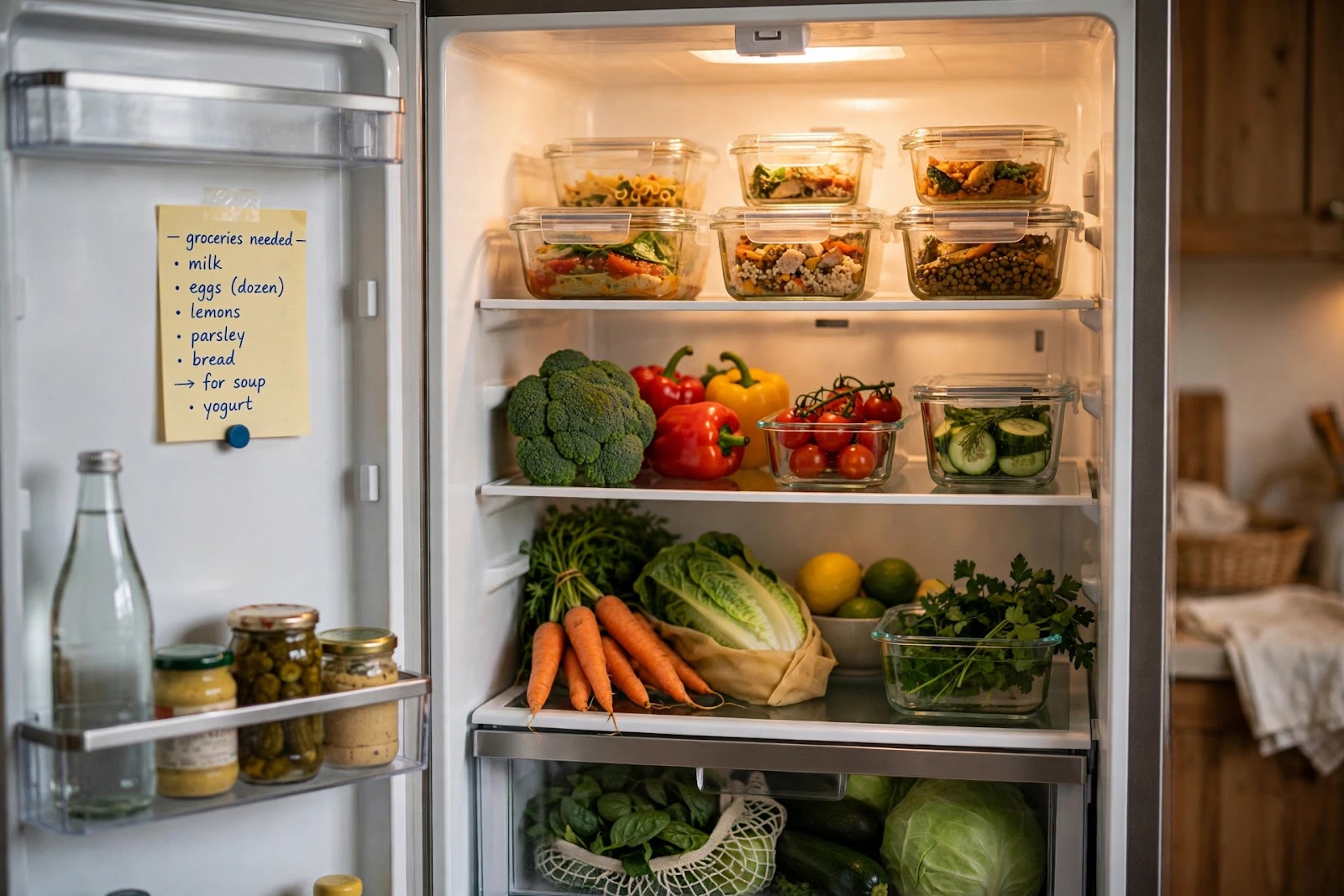
My favourite part of the system is embarrassingly simple: one clear box, labelled "eat first", sitting at eye level. Anything that needs using within two days goes in it. Soft tomatoes, the last two eggs, half a block of tofu, yesterday's roast vegetables. When I am hungry and opening the fridge aimlessly, which I do far too often, the box answers the question before I ask it. I grab from there first.
My family laughed at the label at first. Then they started using it too. Now if someone opens a new pack of something while an older one is still in the box, we notice. It is not a strict rule. It is a nudge, sitting right where you cannot miss it. And because the box is clear, nothing hides inside it. That visibility is the whole trick. Out of sight really is out of mind when it comes to food.
Freezing is the audit's best friend, and I underused it for years. Bread goes straight into the freezer now, sliced, so I can toast exactly what I need. Bananas going brown become smoothie bananas, peeled and frozen in a bag. Cooked beans, spare soup, even leftover rice (cooled fast, frozen flat) all get a second life. The freezer is not a graveyard if you label things. Mine has tape and a marker pen living on top of it for exactly that reason.
Shopping after the audit, not before it
The audit only works if the shopping list comes second. I used to write my list from memory, standing in the kitchen doorway, guessing what I needed. Now the list starts with the audit notes. "Use peppers Monday, carrots Wednesday, no more cheese, finish the pasta sauce." Then I add only what is missing. My lists got shorter. My trolley got lighter. And the weird duplicate purchases stopped almost overnight.
I also stopped shopping hungry, which sounds like obvious advice and is still the hardest rule to keep. A hungry shopper buys the extra bag of salad, the second loaf, the snacks that seemed essential at the time. A post-audit shopper buys for the meals already half-planned. The difference shows up in the bin by Friday. Or rather, it does not show up, which is the point.
One more honest note: the audit did not make my fridge perfect. I still lose the occasional courgette to the back of a drawer. I still buy too much fruit when it looks beautiful at the market. The difference is that I catch it early now. A soft peach on Sunday becomes Monday's breakfast instead of Thursday's bin item. Catching waste a day earlier is often all it takes.
The use-it-up meals that save the week
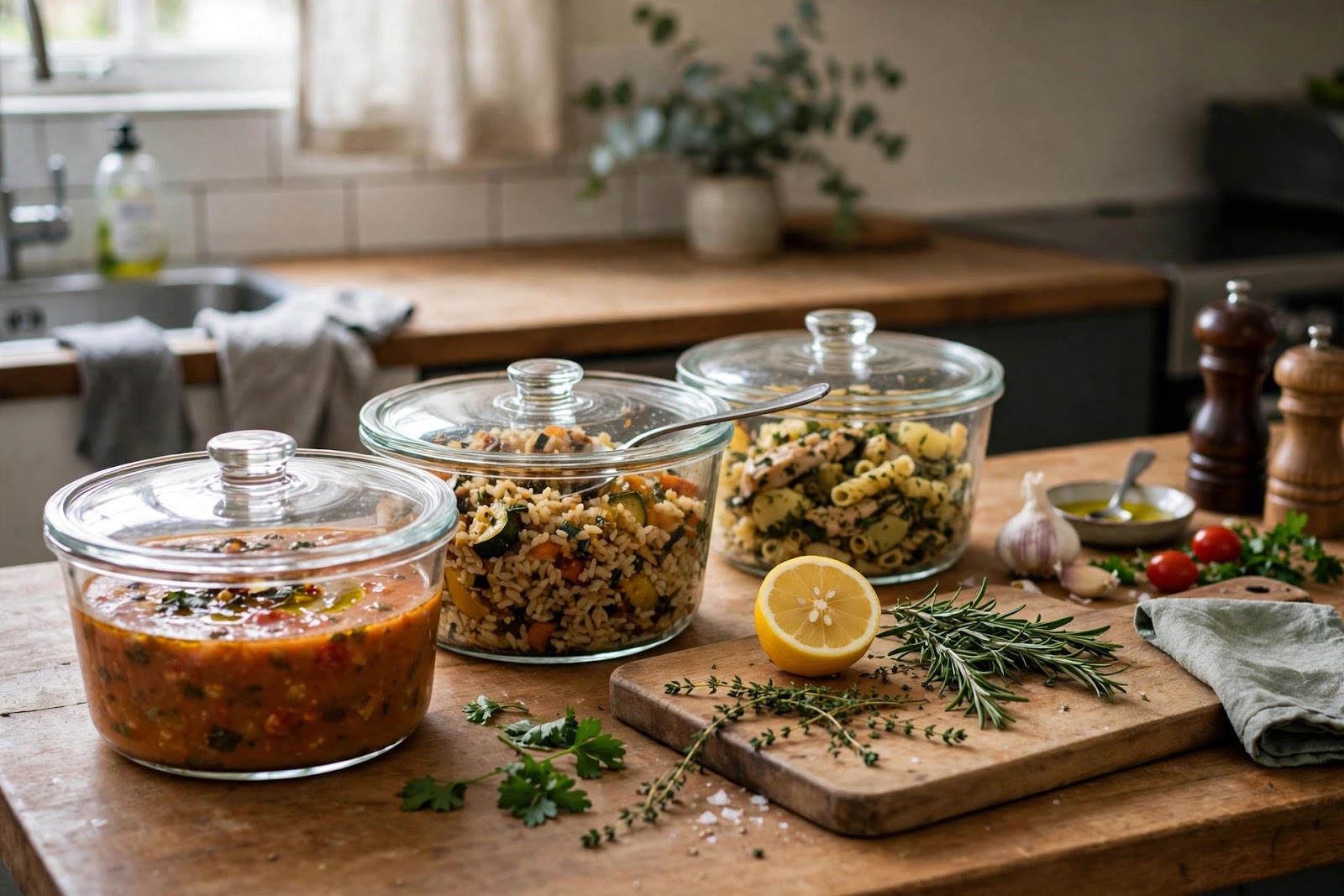
Every audit produces a small pile of things that need rescuing, and over time I built a handful of meals specifically for them. Stir-fry is the first rescue meal. Almost any soft vegetable, any leftover meat or tofu, a splash of soy sauce, garlic, ginger if I have it, and rice or noodles. Nothing in a stir-fry needs to be perfect. A bendy pepper or a slightly tired carrot disappears into it happily, and the result tastes intentional rather than desperate.
Soup is the second rescue. I keep a bag in the freezer labelled "soup bits" where carrot ends, celery tops, and herb stems go during the week. On Sunday, or whenever the bag is full, it becomes stock with water and a bay leaf, simmered for an hour while I do other things. Then I add whatever the audit flagged: potatoes, lentils, a tin of tomatoes, yesterday's roast vegetables. Soup forgives almost everything, and it freezes beautifully in flat bags for busy nights.
Fried rice is the third, and it is my weeknight hero. Cold rice works better than fresh here, because the grains stay separate in the pan. I add eggs, any leftover vegetables, spring onions if I have them, and a dash of sesame oil at the end. The whole thing takes ten minutes, and it turns three separate audit items into one dinner. My family now asks for fried rice specifically, which means the rescue meal has become a favourite, not a punishment.
Baked pasta is the fourth rescue, for the weeks when cheese and half a jar of sauce are both waiting. Cook the pasta, mix with sauce and whatever vegetables need using, top with cheese, bake until bubbling. It is not elegant. It is warm, filling, and it clears the fridge in one dish. I make it on Fridays most often, when the week is ending and the fridge needs a reset before the weekend shop.
Try it this Sunday, badly is fine
If you want to try this, do not buy anything first. No new boxes, no app, no printable chart. Just open the fridge, pull out one shelf, and write down what is there. Note two things that need eating soon. Cook one of them tonight. That is the whole audit in its smallest form, and it already helps.
I also started tracking waste for one month, just with tally marks on the fridge notepad. Each time something went in the bin, I marked what it was. At the end of the month the pattern was embarrassingly clear: salad leaves and bread, over and over. So I bought smaller salad bags, even though the big bag looked better value, and I froze half of every loaf on the day I bought it. The tally marks stopped climbing. You do not need a spreadsheet. A notepad and honesty will show you the same thing, and it takes ten seconds a week.
After a few weeks, you will start to notice your own patterns. Maybe you always overbuy salad. Maybe you forget leftovers. Maybe, like me, you own too many sauces. Those patterns are gold. They tell you exactly what to change, without anyone else's rules. My food waste is roughly half what it was, my shopping is cheaper, and my fridge no longer smells of mystery. Fifteen minutes on a Sunday bought me all of that. It is the easiest sustainable habit I have ever kept, mostly because it never asked me to be perfect, just to look.


