The roll of paper towels on my kitchen counter had been there so long I'd stopped seeing it. It was just part of the kitchen, like the kettle or the fruit bowl — always within reach, always half-used, always replaced without a second thought. Then one Saturday I did the maths. A roll a week, roughly £1.50 a roll, is about £78 a year. Seventy-eight pounds, for something I used to wipe up milk and threw away. That number sat in my head all weekend. On Monday morning, I put the roll in the cupboard under the sink and decided to see if I could live without it for a month.
I should say upfront: I didn't throw the roll away. It's still in the cupboard. And after a month of cloth rags, I still keep one there for emergencies. But the roll I put away on that Monday morning is the same roll, untouched, four weeks later — except for one very greasy incident I'll get to. That surprised me more than anything else about this experiment.
The first week was messier than I expected
The problem wasn't the rags. The problem was my habits. For years, my hand had gone to the paper towel roll without thinking — spill, tear, wipe, bin. The first week, I kept reaching for a roll that wasn't there, standing in front of the counter with wet hands and a puddle of something, feeling faintly annoyed at myself.
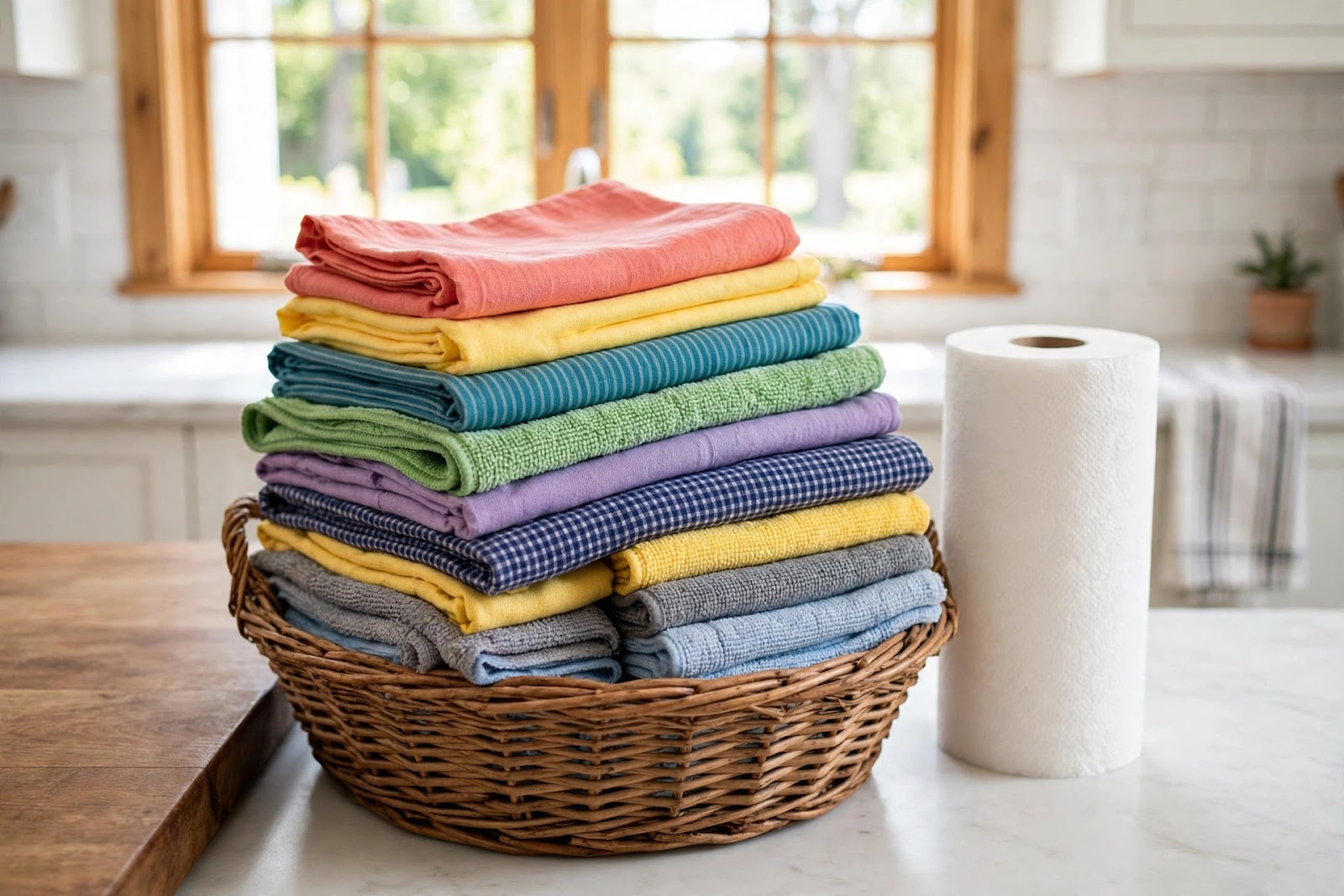
What fixed it was the basket. I put a small wicker basket on the counter, right where the paper towel holder used to sit, filled with folded cloths. Same spot, same motion: reach, grab, wipe. Within a few days the new habit had replaced the old one, because I'd made it just as easy. If the cloths had lived in a drawer across the kitchen, I'd have given up by Wednesday. Convenience beats willpower every single time — that's the real lesson of this whole month, and it applies to almost every swap I've ever tried.
My cloths were nothing fancy. I cut up three old cotton T-shirts that were too stained to wear and too soft to throw away, and I bought a pack of ten cotton dishcloths for £5. The T-shirt rags are the workhorses — thin, absorbent, and they get into corners better than any shop-bought cloth. The dishcloths are thicker, better for wiping down the worktops. Between them, I had thirteen cloths, which turned out to be exactly enough for a week of normal kitchen life before laundry day.
The laundry question
This is the part everyone asks about, and it's the part I worried about most. Doesn't washing rags cancel out the saving? Doesn't it use more water and electricity than paper towels?
Here's what actually happened. I didn't run a single extra wash all month. The used cloths went into a small mesh bag hung on the side of the washing machine, and when the bag was full — usually every five or six days — it went in with whatever load was already going on. A cold wash, with the rest of the towels. Thirteen cloths weigh almost nothing and take up no space in a drum that was already full. The extra water and electricity were, as far as I can tell, zero — because the machine was running anyway.
The one thing I did change: I stopped washing the cloths with fabric softener. Softener coats the fibres and makes cloths less absorbent over time — I learned that the hard way when my first batch of dishcloths started pushing water around the worktop instead of soaking it up. Plain detergent, no softener, and they stayed thirsty. If your cloths ever go stiff or smelly, a hot wash with a splash of white vinegar sorts them out. Mine have been through the machine twenty-odd times now and they're still going strong.
What cloth does better, and what it doesn't
Some jobs, cloth is simply better. Wiping the worktop after cooking: a damp cloth picks up crumbs and grease in one pass, where paper towel shreds and leaves little white flecks behind. Drying washed vegetables. Wiping sticky hands — the kids actually prefer the soft cloths to the rough paper. Cleaning the hob after dinner, when a bit of scrubbing is needed: a cloth gives you grip and pressure that a sheet of paper never will.
One job surprised me. I spilt a whole mug of tea across the kitchen table — the proper, brown, everywhere kind of spill. My old instinct was to grab a fistful of paper towel. Instead I grabbed two cloths, laid one flat on the puddle, and watched it drink. It took two cloths and about thirty seconds. The table was dry, the cloths went in the mesh bag, and nothing went in the bin. That was the moment I stopped missing paper towels.
But let's be honest about the limits, because there are some. Raw chicken is the big one. I will not wipe up raw chicken juice with a cloth that goes in the family laundry. That job still gets paper towel, and I don't feel bad about it — food safety isn't the place for a zero-waste experiment. The same goes for anything involving bleach or strong cleaning chemicals, and for cleaning up after the cat has been sick. Some messes deserve to go straight in the bin.
The greasy pan incident
Week three, I fried bacon. The pan was full of hot fat, and in a moment of overconfidence I grabbed a cloth to wipe the pan out before washing it. The cloth came away sodden with grease, the smell of hot bacon fat filled the kitchen, and the cloth — well, it never really recovered. It went through two hot washes and still smelled faintly of bacon. It's now the designated greasy-pan cloth, kept separate from the rest, and it has a job it does perfectly well: wiping out pans before they go in the sink.
The lesson: use a spatula and a bit of kitchen paper — yes, paper — to get the bulk of the fat out of a pan first, then wash normally. Or let the fat cool and scrape it into the bin. A cloth is not a fat disposal system, and pretending otherwise just ruins a good cloth. That was the only sheet of paper towel I used all month, torn from the emergency roll in the cupboard, and I consider it money well spent.
The money, honestly

Let's do the maths properly, because I promised myself I would. Before the experiment: roughly one roll a week at about £1.50, so about £78 a year, plus the occasional extra roll when something big got spilt. After: a pack of cloths for £5, plus three free T-shirts I already owned. The cloths will last at least a year — mine have already survived a month of heavy use and look fine.
But there's a hidden cost I should mention. Laundry detergent and the share of the wash — tiny, but not zero. And my time: folding cloths, hanging the mesh bag, the odd extra minute here and there. If you value your time at a high hourly rate, paper towels might still win on pure economics. For me, the saving is real but small — maybe £60 a year. The bigger win is the bin. My kitchen bin used to fill up with soggy paper towel every few days. Now it doesn't, and taking the bin out less often is a small daily pleasure I didn't expect.
What about guests?
I worried about this more than I should have. Would people think it was weird, or unhygienic, to hand them a cloth instead of a paper towel? The first time a friend spilt red wine on my table — and of course it was red wine — I handed her a cloth without thinking. She wiped it up, dropped the cloth in the basket, and said nothing at all. Because it's not weird. It's a cloth. People have been wiping tables with cloths for centuries, and the paper towel is the new invention, not the cloth.
I did keep a roll visible for the first dinner party, just in case, tucked at the back of the counter. Nobody touched it. That's when I knew the swap had actually worked — not when I stopped using paper towels myself, but when other people stopped reaching for them too.
The system that stuck
A month in, here's the system that actually works in my kitchen, and it's simple enough that I've stuck with it without thinking about it. Clean cloths live in the basket on the counter, where the paper towels used to be. Used cloths go in the mesh bag by the washing machine — never left in a heap on the counter, because a heap of damp cloths smells by day two, and a smelly system is a system you'll abandon. The bag goes in with the towel wash every five or six days. The emergency roll stays in the cupboard under the sink for raw meat, bleach, and cat sick. That's it. That's the whole system.
If you're thinking of trying it, start the way I did: don't throw anything away. Put the roll in the cupboard and give yourself a month. Cut up two old T-shirts — honestly, the T-shirt rags work better than anything you can buy — and put them where the paper towels used to live. See how long the emergency roll lasts. Mine lasted the whole month with a single sheet torn off, and I have a feeling the next roll will last even longer.
I didn't set out to become a person who lectures people about paper towels. I'm not. I still buy them, one roll at a time, for the jobs that need them. But my kitchen works better now, my bin is lighter, and the counter looks nicer with a basket of coloured cloths on it than it ever did with a half-used roll of white paper. And every time I wipe up a spill with a cloth that will be clean again by Thursday, I think about that £78 a year — not because the money matters that much, but because it turned out I was spending it on something I never actually needed.


