Every summer my windowsill basil turns into a jungle, and every autumn I watch most of it die. Not dramatically. Just a slow yellowing, a few black spots, and then the whole pot goes in the compost while I buy a sad plastic pack of basil for £1.20 the following week. Last July I decided to stop the cycle. A neighbour had mentioned freezing herbs in olive oil, and I had a silicone ice tray, half a bottle of oil, and a basil plant that was about to take over the kitchen. What could go wrong?
Quite a lot, as it turned out. But the cubes that survived are still in my freezer now, four months later, and they have quietly become one of the best things in my kitchen.
The glut that started it
My basil plant was a £1.50 supermarket rescue. The kind that comes in a tiny pot with about forty stems crammed together, already leaning towards the light like it's begging for help. I repotted it into a bigger pot, put it on the sunniest sill, and watered it every other day. By mid-July it had tripled. I was picking leaves for pasta, for salads, for a tomato sandwich every lunch — and it still grew faster than I could eat it.
Then came the week I went away for four days. I came home to a plant that had bolted, flowered, and started to taste bitter. The leaves were still usable, but only just. That was the moment. Either I preserved a big batch right then, or I watched the rest of it go the way of every other summer herb: black, slimy, binned.
I had read about freezing herbs in oil years ago and filed it under "things that sound clever but probably don't work." That evening I tried it anyway, because the alternative was composting a perfectly good plant.
How I actually did it
The method is simple, which is exactly why I was suspicious of it. Pick the leaves, wash them gently, pat them dry — properly dry, not "mostly dry" — then chop them roughly and pack them into an ice cube tray. Pour olive oil over the top until the leaves are covered, then freeze. Once they're solid, pop the cubes out into a bag or a tub, label it, and put it back in the freezer.
I used a silicone tray with fourteen slots, the sort you buy for about £3. Each slot took a small handful of chopped basil and about a tablespoon of oil. One full tray used roughly a third of my basil plant and about 200ml of oil. The whole job took twenty minutes, including washing up.
Two things I did right by accident. First, I used the cheap olive oil, not the good stuff. The good bottle stays on the shelf for salads and finishing. The cubes just need oil that freezes and melts without fuss, and the supermarket own-brand does that fine. Second, I labelled the bag with the date and the herb. Future me is grateful every single time.
The freezer-burn batch (my mistake)
The first tray went perfectly. The second one didn't, and the reason was entirely my fault. I got lazy with the drying. I rinsed a big bowl of parsley, gave it one shake over the sink, chopped it while it was still wet, and packed it into the tray with water beading on the leaves.

Water is the enemy here. The cubes came out cloudy, the herbs went dark within a week, and when I melted one into a pan it spat and hissed like I'd dropped ice into hot fat — because I basically had. The parsley tasted flat and a bit freezer-burnt, the way frozen veg tastes when it's been in there too long. I threw that batch out and did it again, this time spreading the washed leaves on a tea towel for half an hour first. Night and day difference. The second parsley batch is still bright green.
So: dry leaves, covered in oil, no air pockets. If you can see water droplets, wait. If a leaf is poking out of the oil, push it down or add more oil. The oil is doing the protecting — it's a seal, not just a carrier.
What I froze, and what actually worked
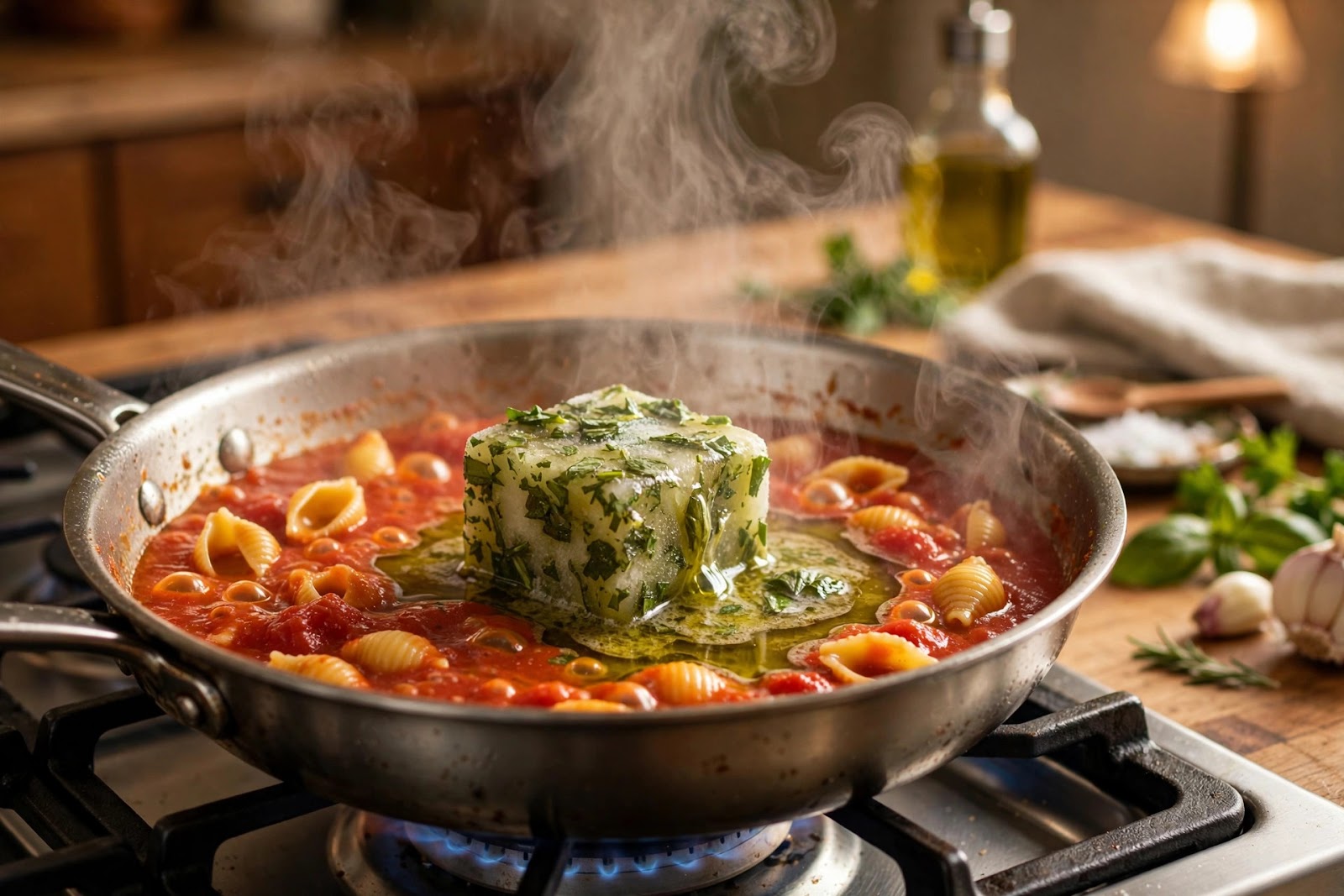
Basil was the star, obviously. A cube melted into a pan of tomatoes and garlic tastes like August, even in November. I drop one straight into the pan — no defrosting, no chopping — and it melts in about a minute. Pasta sauce, soup, a tray of roast vegetables: anywhere you'd cook basil anyway, the cube works.
Parsley held up well too, better than I expected. I use the parsley cubes mostly for soups and stews, and once in a batch of herb butter, which was genuinely lovely on toast. Rosemary was the surprise. I froze whole small sprigs in oil instead of chopping them, and they come out looking almost fresh. Roast potatoes with a rosemary cube are now a regular Sunday thing in my house. The sprig goes soft in the oven heat and the oil carries the flavour into every potato.
Thyme worked, though I found the leaves go a bit dark. It still tastes fine in a stew, so I don't mind. What didn't work: mint. I froze mint the same way and it came out brown and sad, with a flavour that reminded me of toothpaste left in the sun. Mint goes in the drying pile now, not the freezer. And chives went slimy. Some herbs just aren't built for this.
One more thing I learned the hard way: don't mix herbs in a cube unless you know you'll want that exact combination. I made a tray of "Italian mix" — basil, oregano, parsley all together — and then spent three months trying to use it up in dishes that only wanted basil. Single-herb cubes are boring to make and much easier to actually use.
The pasta nights they saved
Here's where the cubes earned their keep. There is a particular weeknight dinner in my house — the one where I get home late, the fridge is nearly empty, and the only plan is pasta. Before the cubes, that dinner was plain pasta with a jar of sauce, or pasta with butter and cheese, eaten standing up.
With a cube, it's a different meal for almost no extra effort. Pan on, cube in, garlic, a tin of tomatoes, pasta in the pot. Ten minutes later it tastes like I actually cooked. The first time I did it, in October, I stood in the kitchen eating straight from the pan and thought about the basil plant that had nearly gone in the compost. It felt like a small victory, and honestly, it was.
The cubes also rescued a soup I nearly ruined. I'd made a pot of lentil soup that tasted like wet cardboard — under-seasoned, no depth. One parsley cube and one rosemary cube, melted in at the end, and it went from "we're eating this because it's there" to "actually, this is good." That's the real value: not the money saved, but the meals saved.
The money, because someone will ask
Let's do the honest maths. A tray of fourteen basil cubes used about 200ml of oil, roughly 80p worth at supermarket prices, plus a plant that cost £1.50. That's about 16p a cube. A fresh pack of basil costs £1.20 and usually half of it goes limp in the fridge before I use it. One cube does the job of most of a pack in a cooked dish, so each cube is saving me roughly a pound — if I use them all, which I mostly have.
But the bigger saving is waste. Before this, I was buying fresh herbs, using a third, and binning the rest. Now I buy one plant, use what I need fresh, and freeze the surplus before it turns. Over a summer that's maybe five or six packs I didn't buy and didn't throw away. It's not going to pay the rent. It is going to stop that little stab of guilt every time I open the fridge and see a blackened bunch of coriander.
One caution: don't buy expensive oil for this. I tried a batch with a nicer extra virgin oil once, because it was open, and the cubes tasted exactly the same as the cheap-oil ones once cooked. Save the good oil for the salad bowl.
What I'd do differently next summer
I'd start earlier. The best time to freeze herbs is when they're at their peak, not when they're already bolting and bitter. Next June, the moment the basil gets bushy, I'll freeze a tray every week instead of waiting for a crisis.
I'd also freeze in smaller batches of more varieties. Two trays of basil is plenty; one tray each of basil, parsley, rosemary, and thyme is more useful. And I'd write the herb name bigger on the bag, because frozen cubes all look the same through a frosted bag and I have defrosted rosemary when I wanted basil more than once.
The tray matters too. Silicone trays release the cubes easily; the hard plastic one I tried first needed me to run warm water over the back, which half-melted the cubes. If you're buying a tray for this, get silicone, and get one with a lid if you can. The lid stops the cubes picking up freezer smells, which is a real thing — my first lidless batch tasted faintly of frozen peas for a week.
Try it with one tray
You don't need a glut to start. One bunch of parsley, one ice tray, a glug of oil, twenty minutes. That's the whole experiment, and if it doesn't work for you, you've lost almost nothing.
Pick leaves at their best, dry them properly, pack them tight, cover them in oil, freeze them solid, and label the bag. Use the cubes straight from frozen, straight into a hot pan. Skip mint and chives. And don't mix your herbs unless you're sure about the combination.
Four months after that first tray, I've got about twenty cubes left, and the basil plant on the sill is already thinking about spring. When it takes off again, I'll be ready — tray washed, oil in the cupboard, tea towel laid out for drying. This time, no basil gets wasted.


