I'd grown tomatoes in a pot, herbs on the windowsill, even lettuce from a sad stump in a jam jar. Potatoes felt different. They grow underground, out of sight, and I had no garden — just a balcony, a railing, and a neighbour who already thought my plant collection had gone too far.
Then a friend tipped a fabric sack onto her patio and out rolled a pile of potatoes. Not three or four. A proper heap. She'd grown them in that one sack, on concrete, with no digging at all. I went home and ordered two grow sacks the same evening.
That was early March. By late July I'd harvested just over 12 kilos from two sacks, and I only messed up twice in a way that actually cost me potatoes. If you've got a sunny balcony and a bit of patience, this is the easiest serious food I've ever grown.
Why a sack beats a pot for potatoes
A potato plant doesn't just need room for roots. It needs room to keep burying its stems. Every time you pile more compost around the stem, the plant grows more tubers along the buried part. That's the whole trick, and a tall sack makes it simple.
A normal pot is too shallow and too rigid. A grow sack rolls down at the start, then you unroll it bit by bit as you add compost. Mine were 40-litre fabric sacks, about 45 cm across, and they cost me £7 for a pair. The fabric breathes, so the compost doesn't turn into a soggy swamp after rain.
Plastic sacks work too, but poke drainage holes in the bottom or you'll regret it. I learned that on a different project years ago, when a plastic tub of herbs drowned in one wet weekend. Fabric drains on its own, which is one less thing to get wrong.
The setup I used (and what it cost)
I used two 40-litre fabric grow sacks, four seed potatoes per sack, and about 60 litres of multi-purpose compost in total. The seed potatoes were Charlotte, a waxy salad variety, because I wanted potatoes that hold together in a salad rather than falling apart in mash.
Don't plant supermarket potatoes. I know people do it, and sometimes it works, but shop potatoes are often treated to stop them sprouting, and they can carry blight into your compost. Certified seed potatoes cost me £3.50 for a bag of ten, and they came already sprouting little green shoots.
Chitting — letting the seed potatoes sprout before planting — sounds fussy, but it takes no effort. I stood mine in an egg box on the kitchen windowsill, shoot end up, for two weeks. The shoots grew short and stubby, about a centimetre long, which is exactly what you want. Long pale shoots snap off. Short green ones are tough.
The compost was the ordinary bagged kind, £6 for 50 litres, plus a bucket of my own homemade compost mixed in for the top layers. No fertiliser, no special potato feed. I did add a handful of crushed eggshells to each sack, mostly out of habit, and I can't honestly say it made a difference.
Planting day: the part I nearly overthought
I rolled each sack down to about 20 cm high, filled it with 15 cm of damp compost, and placed four seed potatoes on top, shoots pointing up, spaced like the corners of a square. Then I covered them with another 10 cm of compost and watered it well.
That's it. No digging, no trenches, no kneeling in mud. I stood the sacks against the sunniest wall of the balcony, where they get sun from mid-morning until late afternoon, and I put a saucer underneath each one to catch drips and keep the downstairs neighbour happy.
The first green shoots appeared after about three weeks. I checked every morning like a kid waiting for a birthday, which is embarrassing to admit, but there it is. When the shoots reached about 15 cm tall, I unrolled the sack a little and added compost until only the top few leaves showed.

Earthing up: the one job that actually matters
Earthing up is just piling compost around the stems as the plant grows. Do it three or four times over the season, and each time the plant makes more potatoes. Skip it, and you get a small harvest of green potatoes sitting on the surface.
I earthed up every ten days or so, whenever the stems had grown another 15 cm. I'd unroll the sack, tip in compost, and water it in. The whole job took five minutes per sack, and it became part of my Sunday morning routine, right after I put the kettle on.
By early June the sacks were full to the top and the plants were bushy, about 60 cm tall, with dark green leaves. They looked so healthy I started telling people about them, which is always the moment something goes wrong. Sure enough, the first problem arrived the following week.
Watering: more than I expected, less than I feared
Potatoes in sacks dry out faster than potatoes in the ground. The fabric breathes, the sun hits the sides, and the balcony wind strips moisture away. In hot weather I watered every day, sometimes twice, until water ran out of the bottom.
The trick I settled on was watering in the morning, slowly, so the compost soaked through instead of running down the sides. A quick splash on the surface does nothing. I used a two-litre watering can with a rose on it, and each sack took about four litres on a hot day.
If the leaves droop in the afternoon sun, don't panic. Mine did that most days in July and perked up by evening. Drooping in the morning is the real warning sign — that means the sack is dry all the way through, and you need to water deeply, not just sprinkle the top.
The green tuber mistake (and how to avoid it)
Here's my first real mistake. In mid-June I peeked at the top of the compost and found a potato poking out, green as a lime. I'd earthed up unevenly, and one tuber had sat in the sunlight for days. Green potatoes contain solanine, which tastes bitter and can upset your stomach, so that one went straight in the compost bin.
It wasn't just one, either. When I harvested, I found four green ones in total, all from the top layer where my earthing up had been sloppy. The fix is simple: keep the tubers covered. Any potato you can see is a potato that needs another handful of compost on top of it.
From then on I checked the surface every few days and tucked compost over anything showing. It's a ten-second job, and it saved the rest of the crop. Don't eat green potatoes, and don't try to peel the green away and hope for the best — if the green goes deep, the whole thing is a write-off.
Blight, aphids, and the summer I got lucky
Potato blight is the disease every grower dreads. It shows up as brown patches on the leaves in warm, damp weather, and it can kill a plant in days. I checked my leaves every morning, and in a wet week in early July I did find a few brown-edged leaves on one sack.
I cut the affected leaves off with clean scissors, binned them (never compost them), and kept the plants as dry as I could by watering at the base instead of overhead. Whether that saved them or I just got lucky, I'll never know — the plants kept growing, and the harvest was fine.
When to harvest (and how to know)
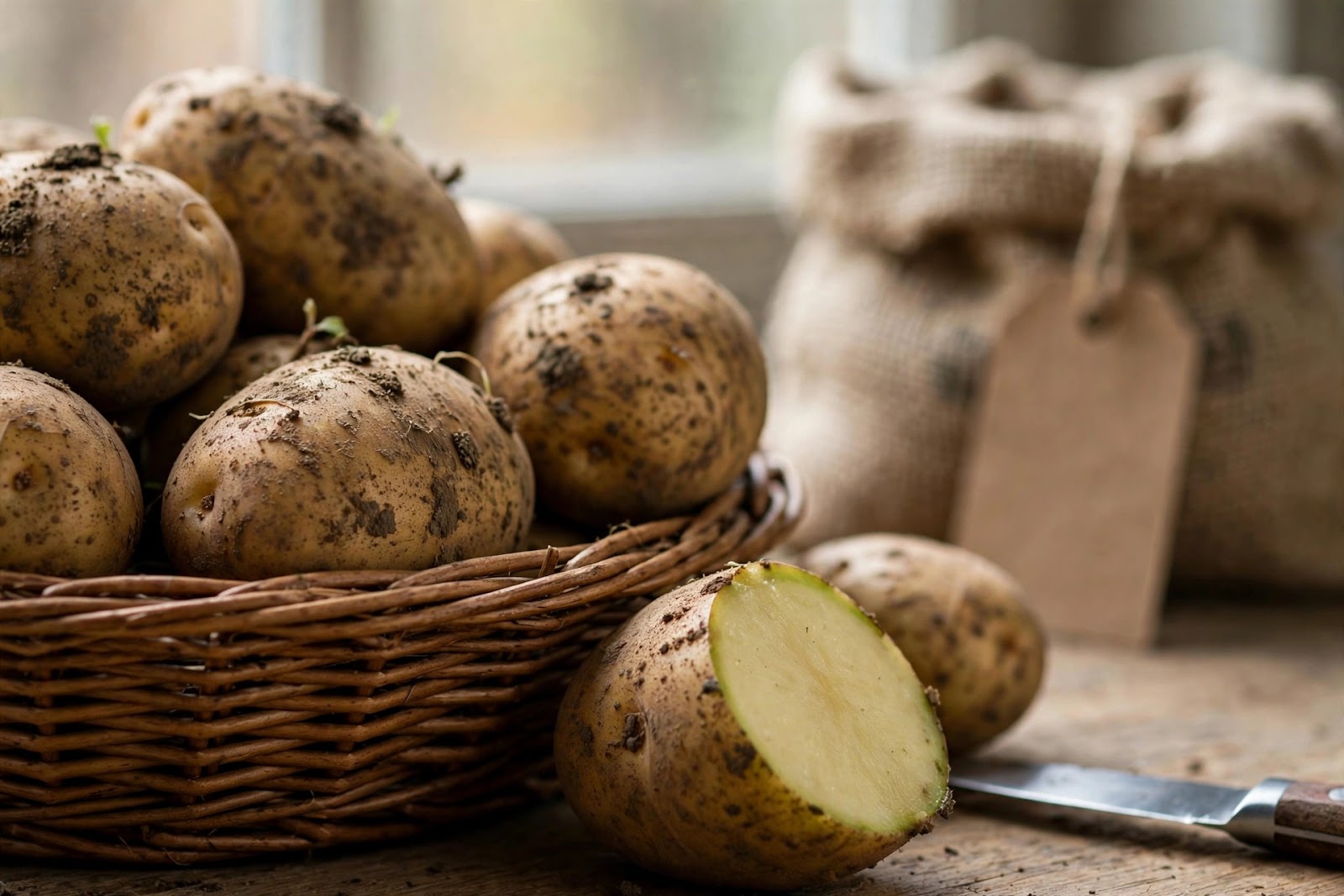
Charlotte is a second early variety, which means you harvest about 13 to 15 weeks after planting, once the flowers have faded. Mine flowered in late June, pretty little white blooms, and by mid-July the flowers were gone and the leaves were starting to yellow at the edges.
I waited one more week after the flowers faded, then stopped watering. A dry sack is much easier to tip out, and the potato skins firm up a bit when the compost dries. That last week of waiting was the hardest part of the whole project. I kept wanting to peek.
On harvest day I laid an old sheet on the balcony, tipped the first sack onto it, and dug through the compost with my hands. It felt like a treasure hunt. The potatoes were everywhere — big ones near the bottom, small ones near the top, all pale and clean from the loose compost.
What I actually got: the honest numbers
Sack one gave me 6.4 kilos. Sack two gave me 5.8 kilos. That's 12.2 kilos from eight seed potatoes, which works out at about 1.5 kilos per plant. I weighed them on the kitchen scales, in batches, because I wanted real numbers and not a vague "loads".
Four of those kilos were small, under 4 cm across, but they roasted beautifully whole, skins on, with rosemary from the windowsill. The biggest potato weighed 210 grams, about the size of my fist, and I still don't know why that one plant did so much better than its neighbours.
The total cost was around £16.50: £7 for the sacks, £3.50 for seed potatoes, £6 for compost. That works out at about £1.35 a kilo, which is roughly what decent salad potatoes cost in the shops. I didn't save a fortune. I grew better potatoes, and I grew them myself, which was the point.
What I'd do differently next year
First, I'd plant earlier. I planted in mid-March, but I could have started two weeks sooner with a bit of fleece over the sacks on cold nights. An earlier start would have meant an earlier harvest, before the worst of the July heat.
Second, I'd be more careful with earthing up. Those four green potatoes were entirely my fault, and they were the only real waste in the whole harvest. A quick check every few days beats a big tidy-up once a month.
Third, I'd grow a second variety. Charlotte was lovely, but next year I'm adding a floury maincrop like Maris Piper in a third sack, planted a month later, so the harvest stretches into September. Two varieties, two harvests, one balcony.
Is it worth it if you only have a balcony?
Yes, if you like potatoes and you like the idea of growing your own food. No, if you're only counting pennies — the savings are modest, and a bad summer could wipe them out. But the potatoes tasted better than any I've bought in years, firm and nutty, and they were still warm from the sun when I carried them inside.
Start with one sack. Four seed potatoes, a bag of compost, and a sunny corner. If it works, add a second sack next year. If it doesn't, you've lost £8 and a few Sunday mornings, and you'll know exactly what went wrong.
My balcony still looks like a small farm, my neighbour still thinks I've gone too far, and the sacks are already hanging on the rail, waiting for spring.


