The thing that finally pushed me off disposable razors wasn't a documentary about plastic or a zero-waste epiphany. It was a bin. I was cleaning out under my bathroom sink one Saturday and found a small plastic bag I'd been tossing old razors into — the kind of bag you mean to deal with later and never do. It was full. Twenty-something cartridge razors, each one a chunk of plastic and rubber and dull metal, each one bought for a few pounds and thrown away after a week or two. I stood there holding it and thought: I've been doing this for fifteen years. That's a lot of bags.
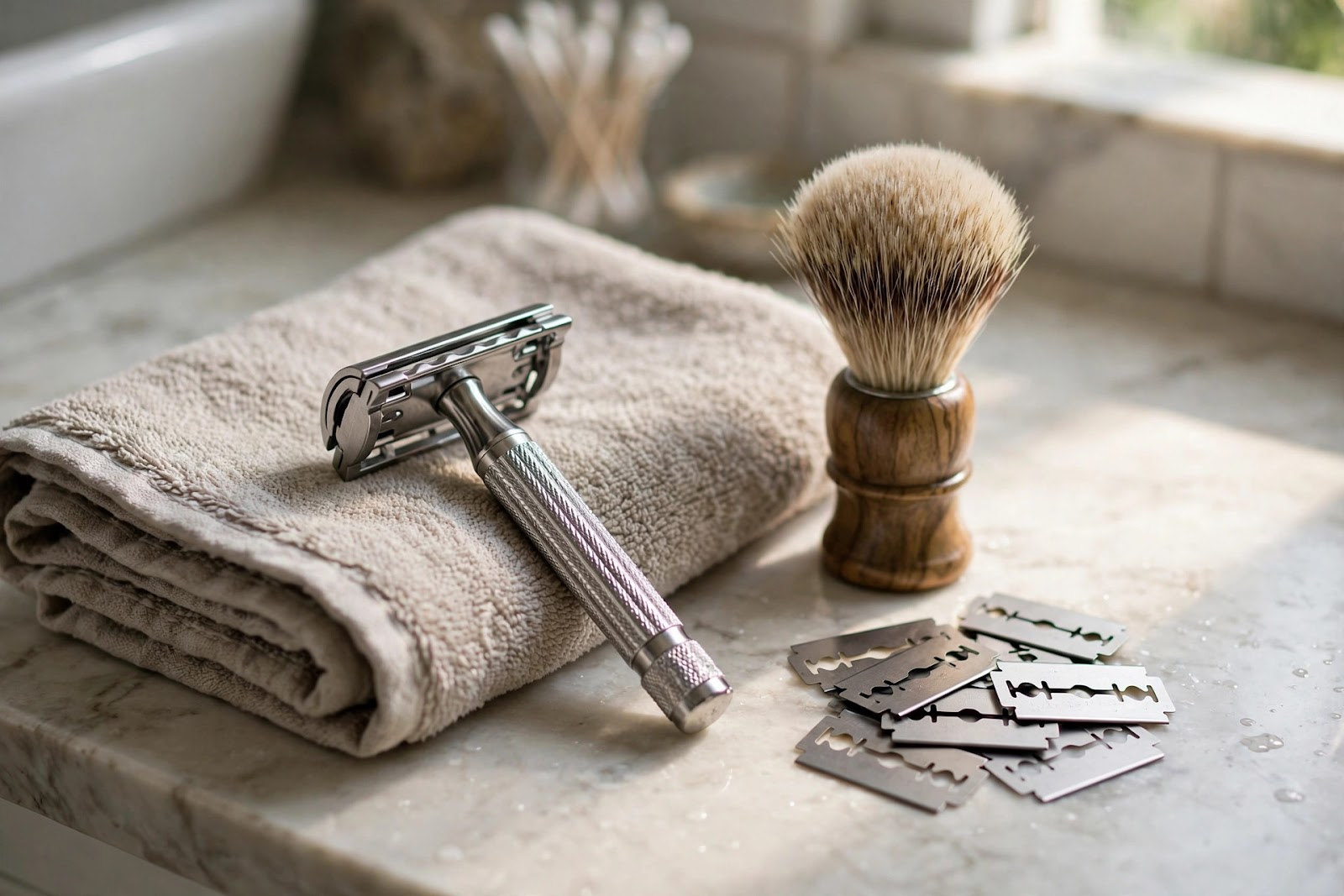
So I bought a safety razor. One of those old-fashioned metal ones your grandad probably used, with a single double-edged blade you swap out yourself. It cost me £24 for the handle, and a pack of 100 blades cost £9. That was three months ago. This is the honest account of what happened next — the blood, the learning curve, the money, and whether I'd actually recommend it.
Why I picked a safety razor over everything else
I'd already tried the other options, in case you're wondering. Electric shavers leave my neck patchy and irritated no matter which one I buy. Straight razors look magnificent and terrifying in equal measure, and I know myself well enough to know I would not maintain one properly. The safety razor sat in the middle: one blade, no plastic body to throw away, and a design that hasn't really changed in about a hundred years, which tells you something about whether it works.
The waste math was what sold me. A cartridge razor is mostly plastic. You can't recycle it through normal channels because it's a glued-together mix of materials with a sharp bit in it. A safety razor blade is a thin piece of steel. It goes in a blade bank — basically a tin with a slot — and when it's full, the whole thing goes in the metal recycling. The handle lasts decades. Mine is solid brass with a chrome finish, and it has enough weight that it feels like a tool, not a toy.
But I'm not going to pretend the environmental argument alone would have kept me going through the first two weeks. It wouldn't have. The money argument helped more.
The first shave was a disaster (and that's normal)
Let me be specific about how bad the first shave was, because every guide I read beforehand said "there's a learning curve" in that breezy way that hides actual blood. I nicked myself four times. Once on my jawline, once under my nose, and twice on my neck, where the skin is softer and the angle is harder to judge. Nothing dramatic — no scene from a horror film — but enough little red dots that I looked like I'd lost a fight with a rose bush.
The problem was pressure. With a cartridge razor, you press. The pivoting head and the multiple blades are designed to forgive you pressing too hard, and fifteen years of muscle memory had taught my hand to push. A safety razor punishes that. The blade is fully exposed and the handle is heavy, so the weight of the razor itself is supposed to do the work. You just guide it. Press, and it bites.
I finished that first shave, cleaned up the nicks with a styptic pencil — buy one before you start, honestly, it's about £3 and it stops a nick bleeding in seconds — and nearly put the razor in a drawer. What stopped me was that the shave itself, on the patches I hadn't nicked, was genuinely closer than anything I'd had from a cartridge in years. One pass with the grain left my cheeks smoother than two passes with a five-blade cartridge ever had. That was annoying, because it meant the thing worked and I just had to learn it.
What I changed in week two
Three things fixed most of the problems, and I wish someone had written them this plainly before I started.
First, I stopped shaving first thing in the morning with cold water. Hot water matters more with a safety razor than with a cartridge. I started shaving after a shower, or at least after holding a hot flannel on my face for a minute. Soft stubble cuts cleanly. Dry, cold stubble drags and skips, and skipping is what causes nicks.
Second, I mapped my grain. This sounds fussy, but it takes one evening. I let my stubble grow for two days, then ran my fingers over it in different directions. On my cheeks, it grows downwards. On my neck, it grows sideways toward my ears on the left and upwards on the right — a pattern I had never noticed in fifteen years of dragging a razor over it. Shaving with the grain on the first pass, instead of against it, cut my irritation by more than half.
Third, I shortened my strokes. Long, confident sweeps are a cartridge habit. With a safety razor, short strokes of about two centimetres, rinsing often, give you control. It feels slow at first. After a week it felt normal, and my shave actually got faster than it had been with cartridges, because I stopped needing three passes to get smooth.
The routine I settled into
By week four, I had a routine that hasn't changed since. Shower first, or hot flannel if I'm in a rush. Lather with a shaving soap and a brush — I bought a £12 synthetic brush and a £6 tin of soap, and both are still going three months later. The soap is worth mentioning because the canned foam I'd used for years dried my skin out, and I hadn't realised until I stopped using it. The brush lifts the stubble and the soap actually lubricates, instead of just sitting on top like foam does.
One pass with the grain. Rinse. A second pass across the grain on my cheeks and chin, where I want it closer, but never against the grain on my neck — I tried that once in week five, got a rash that lasted two days, and haven't repeated it. Cold water rinse at the end, which closes everything up and feels surprisingly good. A dab of plain, fragrance-free moisturiser. Done. Ten minutes, start to finish, which is about what I spent before.
Blade changes: I swap the blade every four or five shaves. Some people stretch a blade to seven or eight, but blades are nine pence each, and a fresh blade is the difference between a smooth shave and a tuggy one. This is not the place to be frugal. When a blade starts to tug instead of glide, change it. The used blades go straight into the blade bank on the shelf — a little tin I bought for £4 that will take years to fill.
The money math, done properly
Here's the honest breakdown, because "it saves money" without numbers is just a slogan.
Before: I bought packs of four cartridge refills for about £12, and each cartridge lasted me roughly ten days. That's about £1 per week in cartridges, plus about £3 a month for canned shaving foam. Call it roughly £90 a year, and that's a conservative estimate — some months I went through cartridges faster.
After: the handle was £24, one-time. A hundred blades cost £9, and at one blade per four or five shaves — I shave about five times a week — that's roughly a blade a week, so the pack lasts nearly two years. The soap was £6 and the brush £12; the soap will last about six months, so roughly £12 a year. The blade bank was £4, one-time.
First-year total: about £58, including all the one-time gear. Second year onwards: about £17 a year — blades and soap. So the first year already saves money, and from year two it's not even close. Over five years, cartridges would have cost me around £450. The safety razor setup costs about £125 total over the same period. That's real money, and it came with a better shave.
One caveat, because honesty matters: if you fall down the rabbit hole of collecting fancy handles and artisan soaps, you will spend more, not less. There is an entire hobby world around this, with £80 razors and limited-edition soaps. I have deliberately stayed out of it. One handle, one soap, done.
The plastic I actually stopped throwing away

At my old rate — a cartridge every ten days, plus a foam can every month or so — I was binning roughly 36 cartridges and 12 aerosol cans a year. The cartridges went to landfill because there's no realistic way to recycle them. The cans were recyclable, but still a monthly piece of metal and plastic packaging for something that mostly turned out to be air.
Now my annual shaving waste is about 52 thin steel blades, which go in a tin and then into metal recycling, and two empty soap tins a year. The handle, brush, and blade bank stay. It's not zero waste — I don't think a truly zero-waste shave exists unless you grow a beard — but it's a massive reduction, and it came from changing one purchase, not from overhauling my life.
There's a secondary thing I didn't expect: I actually enjoy shaving now. It sounds like a small thing, but the old routine was a chore I rushed through with a buzzing plastic gadget. The new routine is slower, quieter, and oddly satisfying. The weight of the razor, the smell of the soap, the ritual of it — it turned a task I resented into ten minutes I don't mind. That alone would have kept me going even if the money had been a wash.
The blade sampler rabbit hole (worth one afternoon)
One thing I skipped at first, and shouldn't have, is trying different blades. Safety razor blades are not all the same. Some are sharper, some are smoother, some feel like they're dragging a cheese grater across your face. I bought a sampler pack with ten brands, five blades each, for about £8, and spent a few weeks working through them. Two brands irritated my neck. One was so mild it barely cut anything. The one I settled on gives me a close shave with zero irritation, and I wouldn't have found it if I'd just bought a hundred of the first brand I tried.
The lesson is simple: your face is not my face, and blade choice is personal in a way that cartridge choice never was, because cartridges hide the blade behind plastic and pivot. With a safety razor, the blade is the whole experience. A sampler pack costs less than one pack of cartridges and it saves you from writing off the whole razor because of one bad blade. If you try a safety razor and hate it in the first week, try a different blade before you give up. That single change fixed the experience for two friends I converted, both of whom were ready to quit after their first brand.
Who should not switch (honestly)
Not everyone should do this, and I want to say that plainly. If you shave your head, a safety razor on the back of your skull is genuinely tricky, and plenty of head-shavers stick with cartridges for good reason. If you have very sensitive skin that reacts to everything, patch-test the soap first and expect a two-week adjustment. If you shave in a tearing hurry every morning with one eye on the clock, the learning curve will frustrate you — wait until you have a couple of slow mornings to practise.
And if you travel a lot with only hand luggage, remember that loose safety razor blades are not allowed in cabin bags. You can carry the handle, but the blades have to go in checked luggage or be bought at your destination. That's a real inconvenience, and it's the one thing that still catches me out. I keep a single cartridge razor in my travel kit for hand-luggage-only trips, which feels like cheating but is just practical.
The verdict after 90 days
Ninety days in, I have had zero nicks in the last five weeks. My skin is calmer than it was on cartridges — no more redness on my neck by lunchtime. The shave is closer. The bathroom bin has no razor plastic in it. And I've spent about £58 total, against roughly £22 I would have spent on cartridges and foam in the same three months — so I'm still in the payback period on the handle, and I expect to break even around month seven.
Would I recommend it? Yes, with the honest warning attached: the first two weeks are worse than cartridges. You will nick yourself. You will wonder why you bothered. Then it clicks, and it stays clicked. If you can get through the learning curve — hot water, no pressure, short strokes, map your grain — you get a better shave, less plastic, and a routine that costs a fraction of what you were paying. That's a trade I'd make again without thinking twice.
Start with a mid-priced closed-comb razor, a pack of a blade sampler if you can find one (different blades suit different faces — I settled on a brand I won't name because your face will disagree with mine), a synthetic brush, and a plain soap. Skip the fancy stuff until you know what you actually like. And buy the styptic pencil before the first shave, not after. Trust me on that one.


