I ruined a patch of my kitchen worktop with a bottle of cleaner I made myself. Not a cheap shop-bought spray, not some industrial chemical — a bottle of vinegar water I'd mixed in my own sink, with lemon peels I'd saved from breakfast. It cleaned my hob beautifully. It cut through the grease on the extractor hood like nothing else I'd tried. And then I sprayed it across the marble worktop, wiped it down, and watched a dull, cloudy patch bloom right where the shine used to be.
That patch is still there. It's not huge — about the size of my hand, just left of the sink — but I see it every single morning, and it taught me more about homemade cleaning than any recipe ever could. The spray itself is brilliant. The lesson is knowing where it belongs and where it absolutely does not.
Why I started mixing my own spray
It started with the cupboard. I opened it one Saturday to put away the shopping and actually counted: seven different spray bottles. Glass cleaner, kitchen degreaser, bathroom spray, an all-purpose one, a specialist one for the hob, one for limescale, one I couldn't even remember buying. Most of them were half full. All of them cost between £2.50 and £4. The cupboard smelled like a swimming pool had moved in.
I worked out I was getting through a bottle of kitchen spray roughly every two weeks. That's 26 bottles a year, call it £75 at an average of £3 a bottle, and most of what I was paying for was water in a fancy bottle with a nice label. So I went looking for a recipe that actually worked, because I'd tried the internet's favourite vinegar-water mix before and found it useless on anything greasier than a fingerprint.
The version that changed my mind came from a neighbour, not a blog. She'd been using the same bottle for a year and her kitchen smelled like oranges. Her recipe had one extra step the quick versions skip: steeping the citrus peels in the vinegar for two weeks before you use it. That step is the whole trick, and I'll explain why.
The recipe that actually works
Here's what goes in my bottle. It's a 500 ml spray bottle with a decent trigger — I paid £1.50 for it two years ago and it's still going, so that's already a saving over buying a new bottle every fortnight.
First, the citrus vinegar. Save the peels from two lemons or one big orange — whatever you're eating anyway, so this costs nothing extra. Pack them into a clean glass jar and pour in white vinegar until they're covered, about 250 ml. Put the lid on and leave the jar in a dark cupboard for two weeks. The vinegar pulls the oils out of the peel, and by day fourteen it smells like a cleaning product you'd happily pay £4 for instead of like a chip shop. Strain out the peels — mine go in the compost — and you've got citrus vinegar.
Then the mix. Half citrus vinegar, half water, straight into the spray bottle. That's 250 ml of each for a full bottle. Then, and this is the part most recipes leave out, three or four drops of plain washing-up liquid. Not a squirt, not a tablespoon — drops. The soap is what lets the spray cut grease instead of just pushing it around, and too much of it leaves a film on everything. Shake gently before each use.
That's the whole recipe. Three ingredients, one of them free, and it takes about five minutes of actual work plus two weeks of waiting while a jar sits in a cupboard doing nothing.
The cost comparison, honestly done
Let's do the numbers properly, because homemade-cleaning articles love to fudge them. A litre of white vinegar costs me 85p at the supermarket. My bottle uses 250 ml of vinegar, so that's 21p. The water is pennies — call it 1p. The citrus peels are free because I'd eat the fruit anyway. The washing-up liquid is a few drops out of a bottle that costs £1 and lasts me months; call it 2p. Total per bottle: about 24p. Let's round up to 30p to cover the label and the masking tape I stick on it with the date.
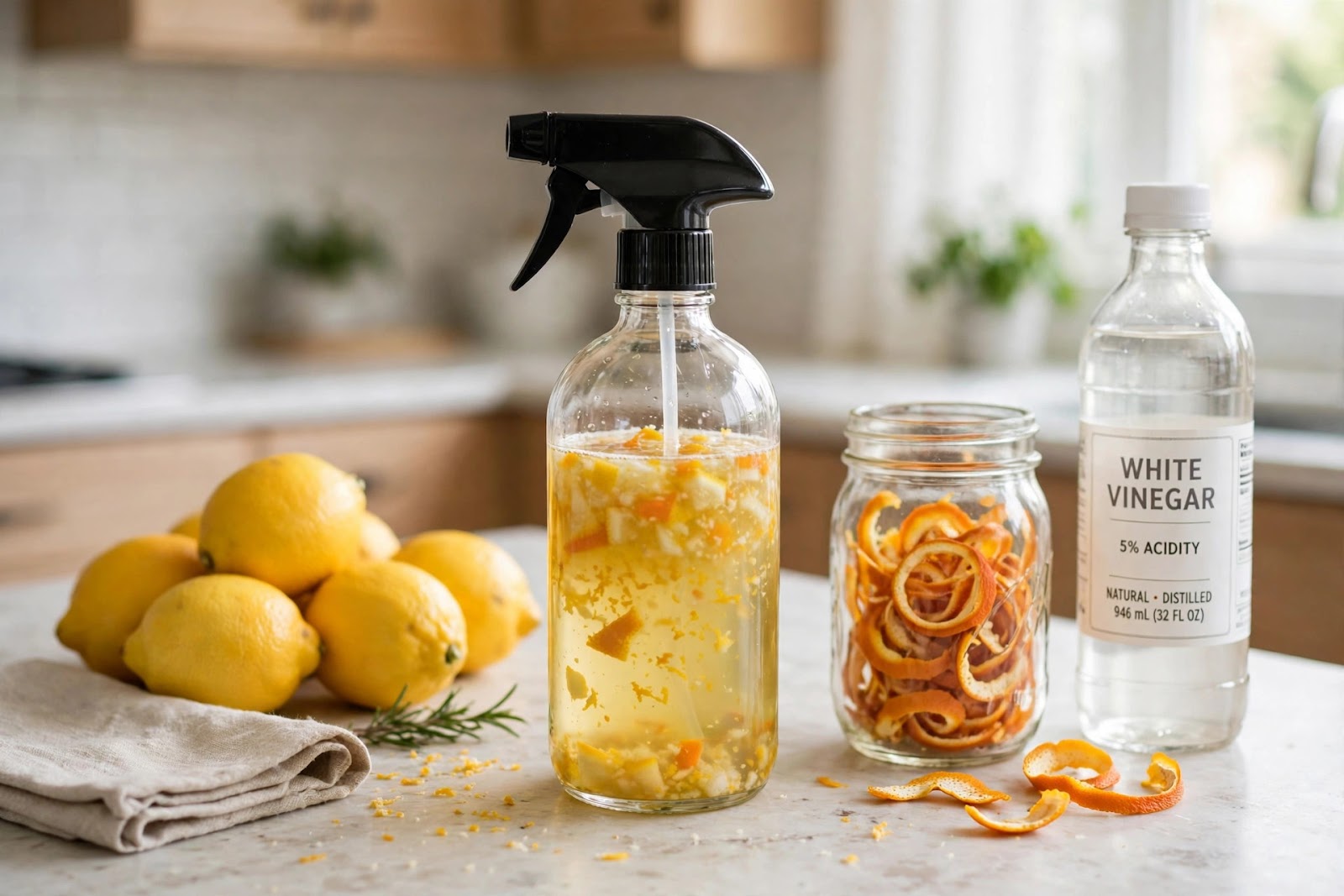
The spray I used to buy cost £3.25 a bottle. I used one every two weeks, so 26 bottles a year cost £84.50. My homemade version costs 30p a bottle, 26 bottles a year cost £7.80. That's a saving of about £77 a year on one product, from one cupboard, in one room. It won't change my life. It does buy a decent dinner out, and it emptied six bottles out of my cupboard, which honestly felt better than the money.
There's a catch in the maths, and I want to be honest about it. The first bottle isn't 30p — it's 30p plus the £1.50 spray bottle and the £1.50 jar, if you don't already own them. And the two-week steep means you can't make a batch the morning you run out. I keep a second bottle of citrus vinegar ready in the cupboard now, so I'm never caught short. After the setup cost, though, the 30p figure is real.
What it cleans brilliantly
The hob was the first win. I spray the cooled hob, leave it for two minutes — not thirty seconds, two full minutes, because the vinegar needs time to work on grease — then wipe with a damp cloth. Burnt-on splashes from a pan of frying onions lift off without scrubbing. The extractor hood, which used to need a specialist degreaser and a lot of elbow grease, comes clean with the same treatment. I spray, I wait, I wipe. It's the easiest clean in my kitchen now.
Glass is the second win. Mirrors, the inside of windows, the glass on the oven door — the spray leaves no streaks as long as I wipe with a dry cloth afterwards instead of a wet one.
It handles the bathroom sink, the taps, and the ceramic tiles around the bath. It shifts the soap scum on the shower screen better than the £3.50 bathroom spray I used to buy, and it doesn't leave that chemical smell that makes your eyes sting. The kitchen bin gets a spray and a wipe once a week, and the lemon smell covers a multitude of sins.
The marble worktop: what went wrong
So the spray was working. It was working so well, in fact, that I got confident. Too confident. That's the part of the story where I stop being the clever person who makes her own cleaner and become the person who damaged her own kitchen.
It was a Tuesday evening. I'd cooked a big pan of tomato sauce and splashed it across the worktop — red spots everywhere, on the marble, on the chopping board, on the wall. I grabbed the spray bottle, misted the whole worktop the way I'd been doing for weeks, wiped it down with the cloth, and went to wash the pan. When I came back, the marble looked fine. I didn't think about it again until the next morning, when the light came through the window at a low angle and I saw it: a cloudy, dull patch, roughly hand-sized, right where I'd sprayed most heavily. The shine was gone. The surface felt slightly rough under my fingertips where it used to feel like glass.
I knew immediately what had happened. Marble is calcium carbonate — limestone, basically. Vinegar is acetic acid. Acid dissolves limestone. I'd sprayed acid on stone and left it sitting there, and the stone had done exactly what stone does when you put acid on it. The vinegar had etched the surface. Not stained it — etched it, as in eaten away a microscopically thin layer of the polish. You can't wipe an etch off. The only fix is getting the worktop professionally re-polished, which costs more than three years of homemade spray savings.
I hadn't checked. That's the honest truth. I'd read the recipe, I'd read the cost comparisons, I'd read the glowing reviews, and I had not once stopped to ask whether vinegar was safe on my specific worktop. The recipe sources all said "don't use on natural stone" — in small print, somewhere near the bottom, in the way that important warnings always seem to be. I skimmed past it because the spray was working so well on everything else.
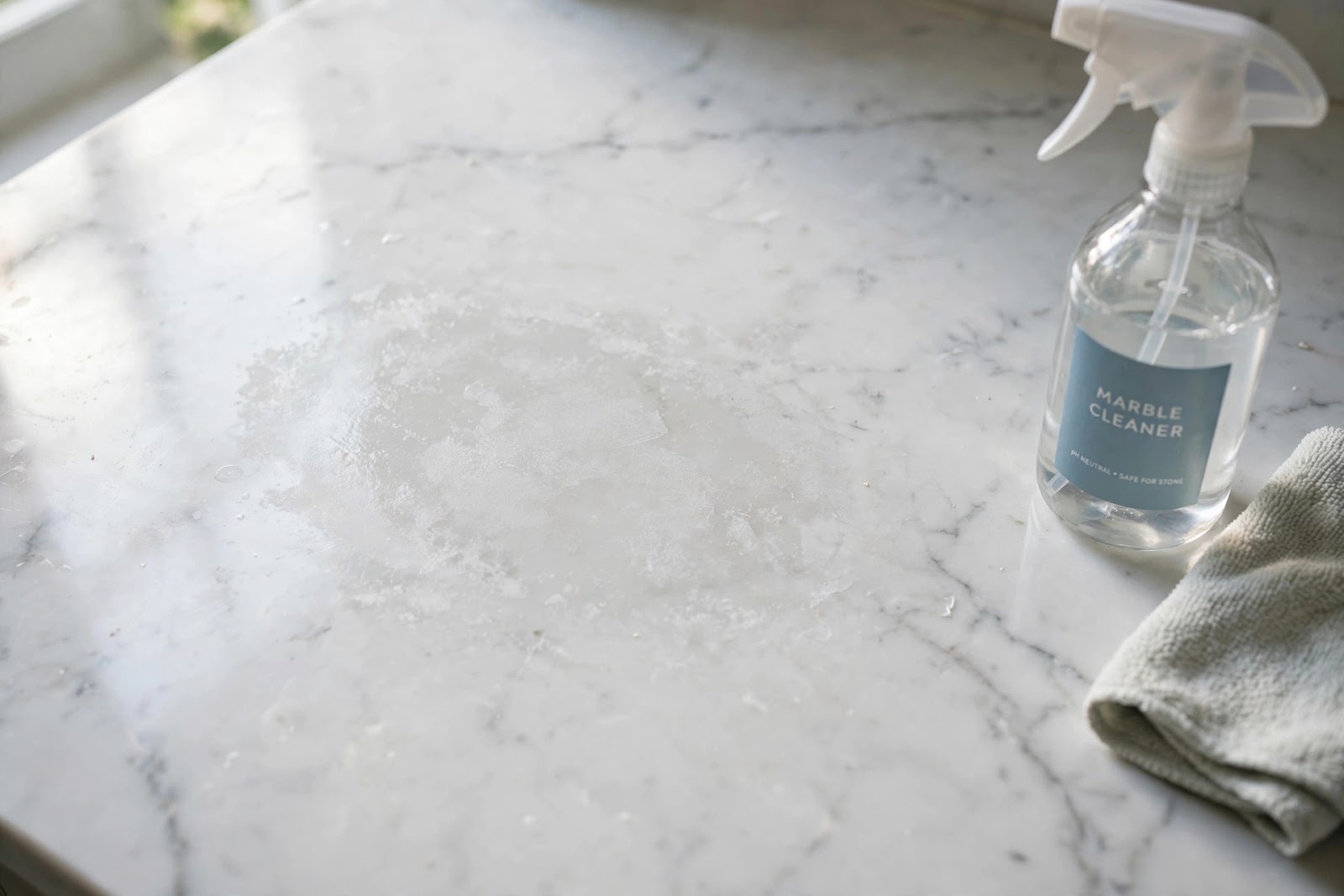
The patch is still there, a year later. I've learned to live with it, and visitors never notice it unless I point it out. But it cost me something, and I want to be specific about the price: a professional re-polish on my section of worktop was quoted at £180. That's more than double what the spray has saved me in a year. The spray still saves me money overall, and I still use it daily — but only because I know exactly where it can and can't go now, and that knowledge cost me £180 to acquire.
Where the spray can and can't go
Here's the list I wish I'd had on day one, taped to the bottle itself. Safe: ceramic tiles, porcelain, glass, mirrors, stainless steel, laminate worktops, the inside of the fridge, plastic, the hob, the extractor hood, taps and chrome fittings. Basically, anything that isn't stone, wood, or waxed.
Never, ever use it on marble, granite, limestone, travertine, or any natural stone. The acid etches stone — all of it, not just marble. My granite-owning friends learned this the same way I did, and their patches are in the same place: right next to the sink, where you spray without thinking. Also never use it on waxed wood or oiled wooden worktops, because it strips the finish. And don't use it on cast iron, because the acid encourages rust. My cast iron pan lives far away from the spray bottle now.
If you're not sure what your worktop is made of, don't guess. Check the paperwork from when it was fitted, or ask the supplier. A thirty-second check beats a £180 re-polish, and I say that as someone who skipped the check.
One more thing: don't mix vinegar spray with bleach, ever. Vinegar and bleach together make chlorine gas. Keep them apart, label your bottle clearly — mine says "VINEGAR SPRAY — NOT FOR STONE" in thick marker — and never decant either into an unlabelled bottle.
The tweaks that made it better
First, the steep matters more than the recipe. A two-week steep gives you a spray that smells like lemons. A three-day steep gives you a spray that smells like a chip shop with a lemon waved over it.
Second, strain properly. I use a fine sieve and then a coffee filter for the last pass, because bits of peel clog the spray trigger, and a clogged trigger at 7am is a special kind of misery. Third, make it in small batches. A 500 ml bottle lasts me about two weeks, and the citrus scent fades after a month. Fresh and small beats big and stale.
Fourth, keep a second spray bottle for plain water. A lot of the jobs I used to do with the vinegar spray just need a damp cloth. The vinegar spray is for grease and grime, not for every wipe.
What I still buy from the shop
I'm not a purist about this. The homemade spray replaced three bottles in my cupboard, but there are two jobs it can't do, and I still buy products for those. The first is the toilet. I use a proper disinfectant for the toilet bowl, because vinegar isn't a registered disinfectant and some jobs need the real thing. The second is the oven interior. Burnt-on oven grease needs a dedicated oven cleaner or a bicarbonate paste left overnight — the spray helps, but it isn't enough on its own.
And the marble worktop? That gets a pH-neutral stone cleaner now, £6 a bottle, used sparingly. It's the most expensive bottle in my cupboard and the least used, and I'm fine with that.
Would I recommend the spray? Yes, honestly, and without hesitation — with the warning attached. It costs 30p a bottle, it cleans better than the £3.25 spray it replaced, it smells like lemons instead of a swimming pool, and it cleared six bottles out of my cupboard. Just check what your worktops are made of first. Check before you spray, not after.


